Recycling and Sustainability for Landscaping Tottenham
 Landscaping Tottenham can be both beautiful and responsible when recycling and sustainability are built into every stage of the work. From the first site clearance to the final tidy-up, a thoughtful approach helps reduce landfill waste, cut emissions, and support the local environment. In a busy part of North London, where gardens, communal courtyards, and small urban outdoor spaces all need regular attention, the way materials are handled matters just as much as the quality of the finish.
Our Landscaping Tottenham approach focuses on keeping reusable materials in circulation and separating waste carefully at the point of collection. We set a minimum recycling percentage target of 85% for suitable green waste, soil, stone, timber, metal, and inert materials, with the aim of improving this year on year. That target is monitored against project type, because a compact garden refresh will produce different waste streams than a full redesign or hard landscaping installation.
Across Tottenham and the wider borough area, waste separation is increasingly important. Local households and businesses are used to sorting recycling streams, and that mindset carries into landscaping works too. By keeping green clippings apart from rubble, and untreated wood away from mixed general waste, we make it easier for material to be recovered. This borough-style approach to separation also helps reduce contamination, which is one of the main reasons recyclable loads become unusable.
Responsible Recycling in Everyday Landscaping
 A sustainable Tottenham landscaping service should treat waste as a resource. Grass cuttings, hedge trimmings, leaves, and other organic matter are collected as green waste and sent for composting or processing where suitable. Soil from excavation can often be screened and reused on other projects, while old paving slabs, bricks, and hardcore can be sorted for aggregate recovery. Even timber elements such as untreated fencing offcuts may be recycled or repurposed when conditions allow.
We also pay close attention to material quality. Clean separation improves recycling outcomes, and it supports a lower-carbon work process because less material needs to be transported multiple times. In practical terms, this means dedicated containers for different waste streams, careful on-site sorting, and planned removal schedules that avoid unnecessary trips. It is a straightforward but effective way to keep landscaping Tottenham projects aligned with modern environmental standards.
 Where possible, we also recover plant pots, edging materials, and metal fixings for reuse or responsible processing. In areas with denser housing and shared outdoor access, such as estate gardens and terrace courtyards, there is often a strong need for organised waste handling. That is why the recycling process is designed to be tidy, safe, and efficient from start to finish.
Local Transfer Stations and Low-Carbon Transport
Another key part of sustainable Landscaping Tottenham work is using nearby transfer stations and recycling facilities wherever possible. Local transfer stations help reduce the distance waste travels before sorting and treatment, which lowers fuel use and supports quicker turnaround times. For projects in Tottenham, this local routing is especially useful because it keeps logistics efficient across a dense urban area where traffic and access can otherwise create delays.
We plan journeys carefully so that materials are taken to approved facilities suited to the waste type. Green waste, inert waste, and mixed construction debris are all directed to appropriate locations, with the goal of maximising recovery and minimising landfill. This practical method helps keep landscaping Tottenham projects environmentally accountable while maintaining a smooth working schedule.
Our fleet includes low-carbon vans designed to reduce emissions on every job. These vehicles are chosen to support cleaner local travel, with lower exhaust output and improved fuel efficiency compared with older alternatives. For short urban trips, that makes a real difference. It also supports quieter, less intrusive journeys through residential streets, which is helpful when working near schools, parks, and shared entrances.
Charity Partnerships and Reuse Opportunities
 Sustainability is not only about recycling; it is also about reuse and social value. That is why Landscaping Tottenham work can include partnerships with charities and community organisations that accept suitable reclaimed items. When materials such as plant pots, garden furniture components, timber offcuts, or decorative stone can be reused safely, they may be donated to help extend their life and reduce waste.
These partnerships can benefit local causes that support community gardening, training, and outdoor improvement schemes. By passing on usable items instead of sending everything for disposal, we help reduce the carbon cost of manufacturing replacements. This is particularly useful in a borough environment where many residents appreciate shared green spaces and where resources can make a meaningful difference to voluntary projects.
We also look for opportunities to support composting-based initiatives. For example, clean green waste can be processed into mulch or compost, which can later be used in planting schemes. That closes the loop and creates a more circular approach to landscaping in Tottenham, where waste from one project can help nourish the next.
What Sustainable Practice Looks Like on Site
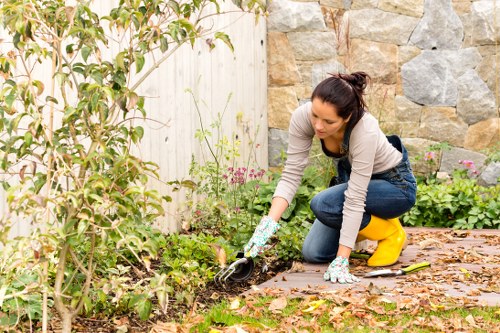 A genuinely sustainable landscaping service uses clear procedures on every site. Waste is separated from the outset, loads are checked before removal, and transport is matched to the volume being moved so that journeys are efficient. Soil is reused where suitable, organic matter is composted, and recyclable materials are directed to the right recovery channels. These steps may seem simple, but together they make a significant environmental impact.
Landscaping Tottenham should reflect the needs of the area: compact spaces, busy streets, mixed residential properties, and a community that values cleaner, greener surroundings. That is why recycling targets, local transfer stations, charity partnerships, and low-carbon vans are not add-ons; they are part of the core service. Combined with careful separation of waste streams, they help create gardens and outdoor spaces that are attractive, practical, and environmentally responsible.
By prioritising recycling and sustainability in this way, Tottenham landscaping projects can reduce landfill, support reuse, and contribute to a lower-carbon local environment. The result is a more circular approach to outdoor work, where every stage is considered and every suitable material has the chance to be recovered, reused, or transformed into something useful again.